
A plank is an isometric hold, a position in which we work the deep postural muscles to stabilise our bodies. Isometric exercises can be more effective for building core strength than moves such as crunches, where the action of flexing and extending the spine can create unwanted intervertebral pressure.
To do a plank, your trunk must be in neutral with its natural curves at the small of your back and nape of your neck.
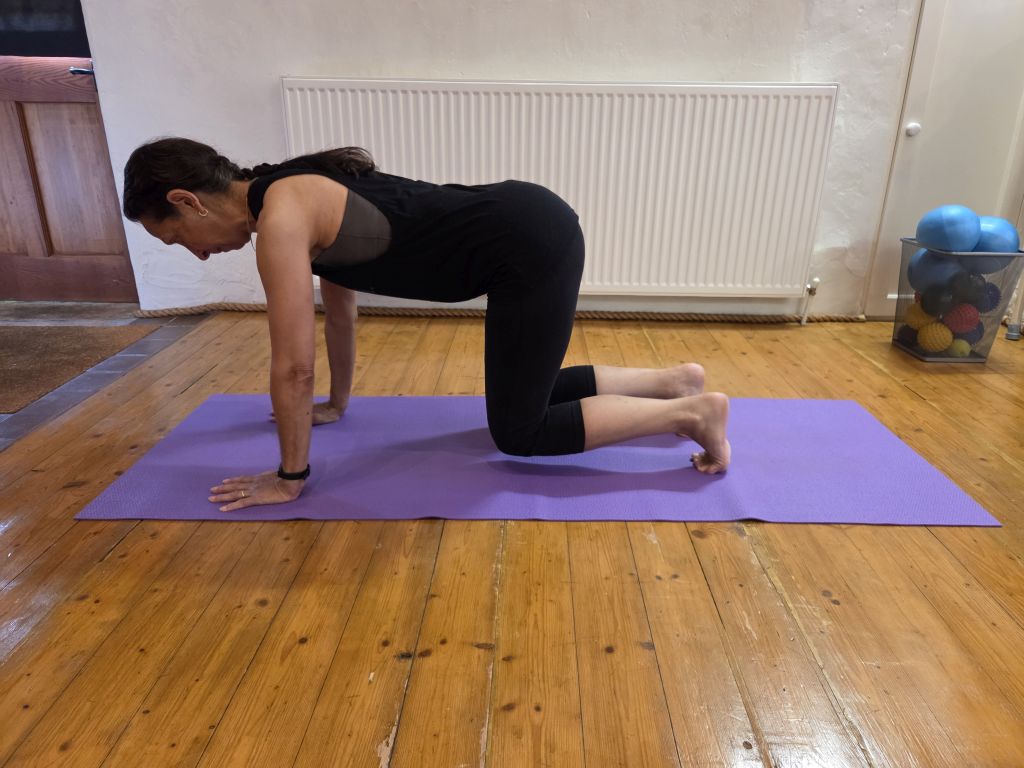
Bear plank (knee hover)
Kneel on all fours, exhale and pick your knees up one or two inches off the floor to support your body weight on your hands and toes.
This works all your deep ab’s, quads, and shoulders to stabilise, resist extension and rotation. It’s helpful for posture, stability and everyday movements.
This is more demanding than standard plank because: bending your knees reduces the support your ab’s get from straight legs; you have to resist rotation as well as extension; you have a shorter base of support.
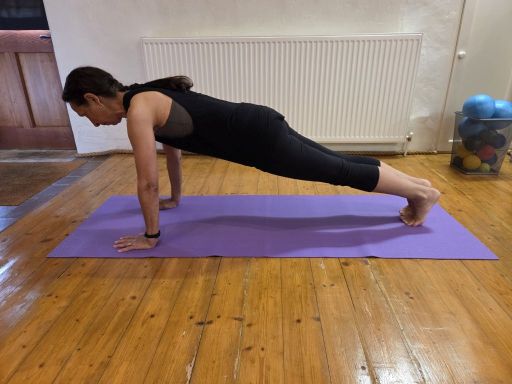
High plank
Kneel on all fours, then step back extending your legs to bring yourself into a straight line supporting your body weight on your hands and toes.
It can be difficult to get into the correct alignment for this exercise. Avoid: dropping in-between your shoulders; sagging in your middle; and pushing up into a pike.
This works your ab’s to resist spinal extension and is helpful for building isometric core strength.
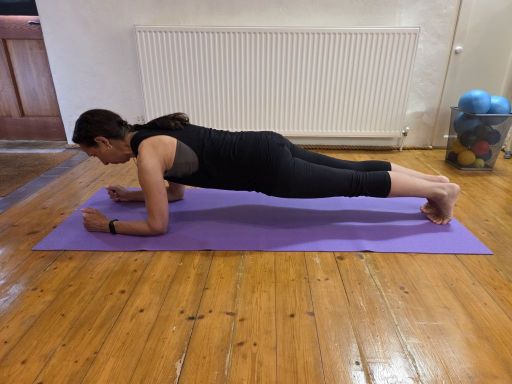
Forearm plank
Kneel with your forearms on the mat, then step back extending your legs to bring yourself into a straight line supporting your body weight on your forearms and toes.
This is more challenging for your core than high plank as your legs are longer levers which increases the load.
Adding challenge
- Increase the length of your hold. Start with 3 rep’s of 3 seconds and build up gradually. In class we do no more than 30 seconds. Note the world record is over 10 hours!
- Change the angle. You can start plank with your hands on the wall, then lower to hands on a chair, then hands on the mat.
- Use an unstable surface, e.g. high plank with your hands on a foam roller.
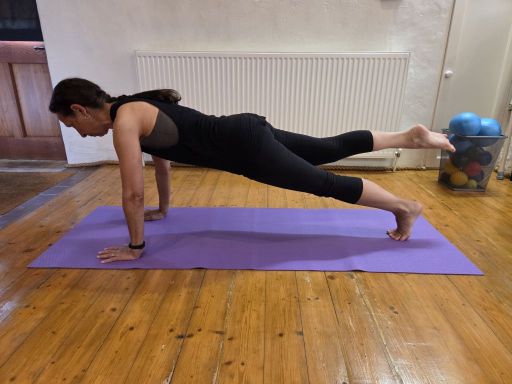
- Raise a leg or arm so you are holding on three out of four points. We do this in the classical Pilates front leg-pull exercise.
- On the Pilates reformer, there are a few exercises in which we hold plank while moving the carriage, e.g. long stretch.
Sources:

